Marketing Guides
Creative & Brand Development
Brand Messaging
How do you respond when someone asks “what does your company do?” Do all your team members answer the same way? Is your response compelling enough that the listener wants to learn more, or do you sound like everyone else?
Brand messaging addresses the written and verbal statements that quickly describe what you do and how you’re different. Brand messaging is used throughout your interactions with your market, such as:
- The “elevator pitch” – the 30-second response to “what do you do?”
- Sales and marketing materials – sales literature, websites, presentations and campaigns all use messages of various lengths
- The introductory statement in a phone call
- Press releases – the blurb at the bottom of the release that explains what the company does
- Slogans
- Your mission statement
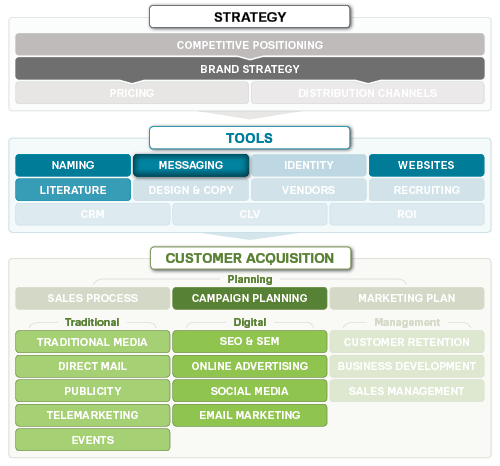
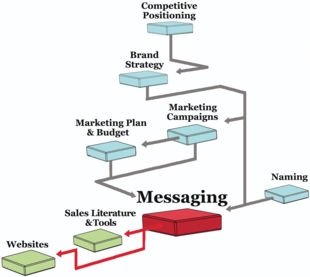
Good brand messaging takes your competitive positioning and brand strategy to the next level. It hones in on what’s important to your market and communicate it consistently and effectively.
| Best Case | Neutral Case | Worst Case |
|---|---|---|
| By carefully crafting your brand messaging, you can strengthen your value proposition, your brand and the reasons your prospects should buy.
It’s easy to communicate your value. The market “gets it” very quickly, speeding up the sales process. |
Ho-hum brand messaging doesn’t help you stand out, but as long as it’s not inaccurate or poorly written, it probably won’t hurt.
You just miss out on the opportunity to strengthen your position. |
Without consistent brand messaging, individual team members create their own authoring and the results are rarely good, and most often consistent.
Poor brand messaging confuses the market and can contradict the other strategies you’ve worked hard to implement. |
Not Sure Where to Start with Brand Messaging?
Access detailed step-by-step plans in our new marketing website.
It’s free to use
Brand Messaging Key Concepts & Steps
Before you begin
Before you start writing your brand messaging, define your brand strategy – it will help you identify what your messages should convey. If you need messages for a marketing campaign or program from your marketing plan, map them out so you’ll know exactly what kind of messages you need. If you haven’t finalized your name, you’ll want to do that before messaging as well. If you’re revamping the messaging for an existing brand, start with a brand audit and consider defining your brand personality traits.
Define your writing style and requirements
Before you start writing, define your style requirements — tone, voice, style, vocabulary – to ensure the writing will be consistent and match your brand strategy.
Create an elevator pitch
The elevator pitch describes who you are, what you do, who your customers are and why they should buy from you. When you’ve written it, say it out loud it to hear how it sounds and how long it takes (no more than 30 seconds).
Create your brand positioning statements and brand story
Write statements of various lengths – 25, 50 and 100 words – so you have a message length that fits a variety of materials. The shorter statements focus on the value and brand position; the longer ones also include features and benefits. Then write a compelling brand story.
Create a tagline/slogan
Your tagline/slogan is a more succinct phrase used in campaigns. It can be one word or a short phrase — and for most business writers, it’s harder to create. You may want to hire a copywriter for this one. It should flow naturally with your brand name.
Create your mission statement
An average mission statement describes why you’re in business. A great mission statement is compelling, shows why you’re different and conveys your company’s personality.
Determine where to use your brand messaging
Make sure to use your new messages consistently. Train your team to use the messages and audit your materials periodically to make sure they’re still working in the future.
After Brand Messaging
Your brand messaging feeds all of your communication with your market. Use it in your corporate identity, sales literature and tools, your website and all of your marketing campaigns.
Check out our comprehensive brand strategy toolkit if you’d like step-by-step guidance.