Marketing Guides
Campaigns & Execution
Trade Show and Event Marketing
There’s an old saying in business that people buy from people. If that’s the case, it’s a good idea to get people together as often as possible!
Trade show and event marketing is a great way to get people together with common interests to achieve a goal. B2B and B2C marketers use trade shows and events to generate leads, nurture prospects, build brand awareness, expand distribution, conduct training, or enhance relationships with existing customers. Options include:
- Trade shows: You can exhibit during the exhibition, sponsor roundtable discussions or speeches, advertise in show materials and/or host your own reception at the event hotel or a restaurant in town.
- Seminars or conferences: Sponsor an industry conference or create a seminar and market it to your prospects.
- Networking meetings: Participate in and/or sponsor industry or local meetings; you can also create a one-time or ongoing breakfast or lunch meeting series for your prospects to attend.
- Webinars: Webinars are online seminars with slides and audio; you can use them to generate leads and communicate with large groups at a lower cost than a live meeting.
- Events for the arts, sports or charities: You can participate in these events as a sponsor with advertising, blocks of tickets, promotions and a reception for your VIPs.
It’s common for trade show and event marketing to require substantial investments with a lot of logistics:
- Event planning
- Travel
- Shipping
- Setup
- Promotion
- Sales materials
- Sales followup
- Measurement
When executed properly, a great trade show or event could produce a large percentage of the leads a company needs to generate over an entire year. With a halfhearted strategy, companies usually get lackluster results.
Do you see your company in any of these trade show and event marketing scenarios?
| Best Case | Neutral Case | Worst Case |
|---|---|---|
| You use trade shows, special events and/or webinars to generate new prospects and reach out to existing prospects and customers.
You stand out from your competitors, deliver compelling information and create meaningful dialog with your market. You set goals and measure them, and you know your ROI is worth the investment. You also implement marketing programs to drive traffic and continue dialog after the event so leads don’t fall through the cracks. |
You regularly attend trade shows and you’ve tried a few webinars with mixed results — there’s a lot of competition for your prospects’ attention.
At shows, your team does a decent job of qualifying leads and following up; you know you generate new business but you don’t know how much. It seems like you could be generating a lot more business from these programs, but you’re not sure how to do it. |
You exhibit at trade shows and you’re never satisfied with your leads. It’s hard to stand around for days and you know leads fall through the cracks in the weeks afterward.
Your competitors are always doing something big at the shows but you haven’t been able to afford anything but your booth. You haven’t tried any other events because they’re an enormous effort for very little payoff.You’ve never really been able to measure the results from the shows you attend – you get a handful of leads and that seems to be it. |
Not Sure Where to Start with Trade Show and Event Marketing?
Access detailed step-by-step plans in our new marketing website.
It’s free to use
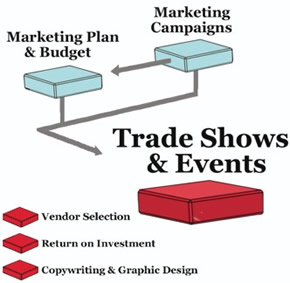
With a solid strategy, planning, investment and measurement, your trade show and event marketing can be an effective part of your annual marketing plan.
Creating a Trade Show and Event Marketing Plan
Before you begin
Most trade show and event marketing campaigns take careful planning with many details to address. It’s best to create your trade show and event strategy months in advance. Better yet, outline your events in your marketing plan so you can build your pre-event and post-event campaigns effectively.
Choose an event that matches your need
- Define your marketing objectives: generate leads, nurture existing leads, build relationships, train & educate, or raise visibility/brand awareness.
- Focus on the type of events that can will help you meet your goals: Industry events and shows, networking events, seminars and conferences, sponsored events, charity events, webinars and more.
- Brainstorm to create a list of events and themes that will fit with your goals.
Outline your event strategy
- Understand what your prospects need and how you can deliver it during the event. For example, think about the content your prospects want and how you should structure the event.
Create your event plan
- Once you have a strategy, start the planning process: time, date, location, theme, event flow, materials, script, responsibilities and more.
- Plan for sales-related activities: what happens with new leads, how you’ll prioritize leads, followup timing, materials they should receive, etc.
Promote your event
- To drive attendance or participation, develop a thorough promotional campaign with a strong call-to-action.
- Use multiple media to touch your market frequently and consistently.
- If you’re sponsoring another company’s event, be sure to promote your participation – don’t leave it up to someone else to drive your traffic.
Script your event and execute
- A good event script and plan will help you execute without problems. Create a detailed timeline; rehearse appropriate activities with your team; make sure everyone clearly understands their responsibilities.
Measure your event’s success
- Look at your goals-to-actual and share the results with your team.
- Document everything you learned so you can use that information next time.
After Your Trade Show and Event Marketing
Trade show and event marketing typically generates new relationships or foster existing ones. It’s important to set solid followup procedures with your sales team so valuable leads don’t fall through the cracks.
TRADE SHOW AND EVENT MARKETING TEMPLATES / MARKETING PLANS / PROJECT MANAGEMENT
EVERYTHING YOU NEED FOR YOUR TRADE SHOW AND EVENT MARKETING PROJECT